
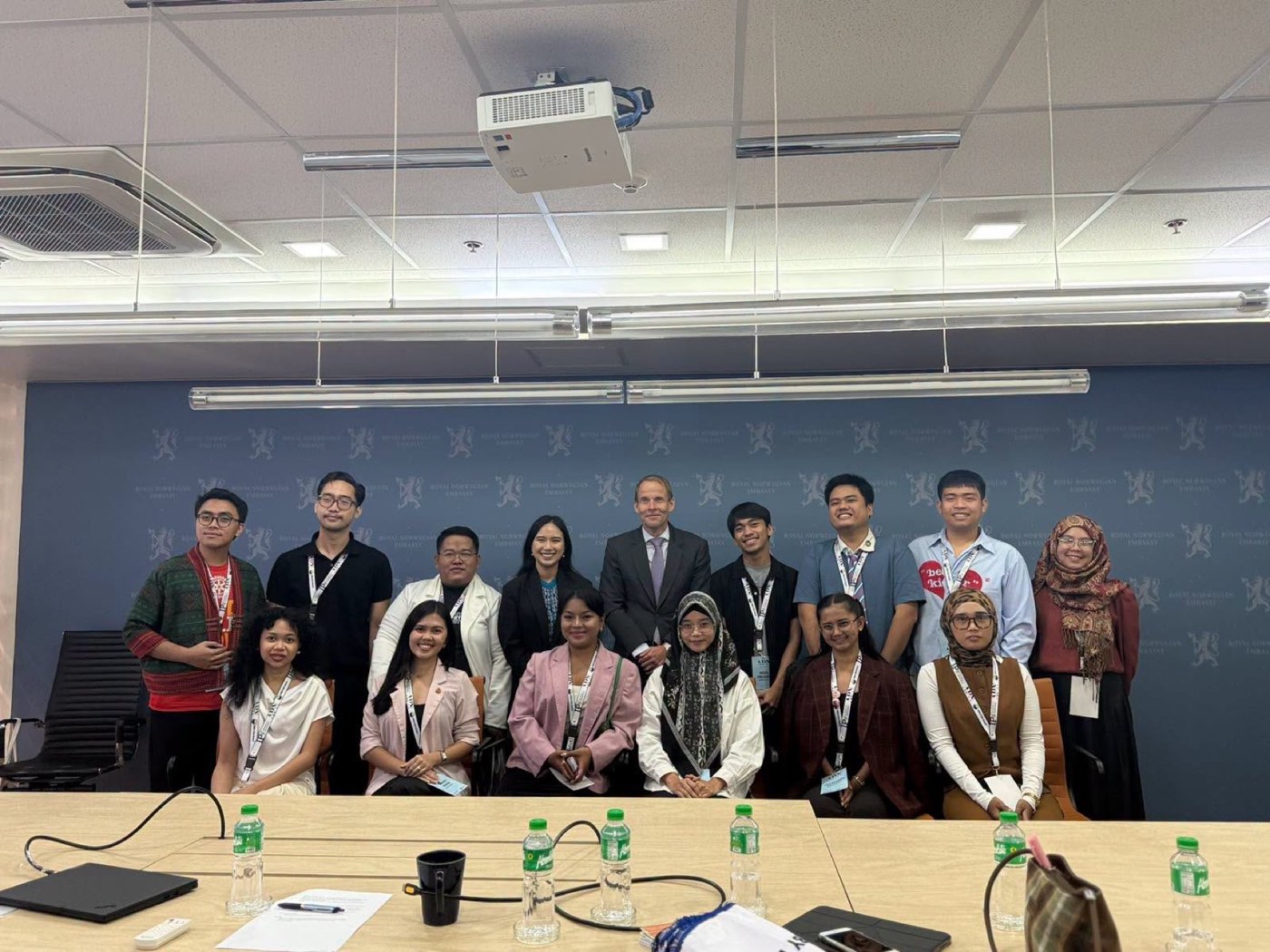
The Applied Peace Network cohort meets with the Royal Norwegian Embassy in Manila.

Program · Philippines · formerly APS PH

Applied Peace Network

A two-week seminar that turns emerging Filipino peace practitioners into people who can actually build peace, through dialogue, immersion, and project ideas built for their own communities.

11

Peace practitioners in the 2026 cohort

100%

Reported a stronger grasp of conflict, justice, and dialogue

96%

Left with a stronger sense of their own peacebuilder identity

2

Capstone projects supported each year

33%

Of participants came from Mindanao, including BARMM and Indigenous communities

2

Weeks. That's the entire program, start to capstone

The program

Peacebuilding, taught where the peace process actually happens.

The Applied Peace Network is an intensive two-week seminar for 10 to 15 aspiring peace practitioners, jointly run by Innovations in Peacebuilding (IP) and KRIS for Peace. It's grounded in the real Philippine peace process, especially the ongoing gains in the Bangsamoro Autonomous Region in Muslim Mindanao (BARMM), and takes on the country's overlapping crises through dialogue, immersion, and action.

APN grew out of the Aspiring Peacebuilders Seminar (APS PH), the same program KRIS ran with Innovations in Peacebuilding in 2025. The 2026 cohort renamed and reshaped it into something more hands-on: fewer lectures, more field visits, and a capstone idea every participant develops and pitches. Two capstone projects are supported each year.
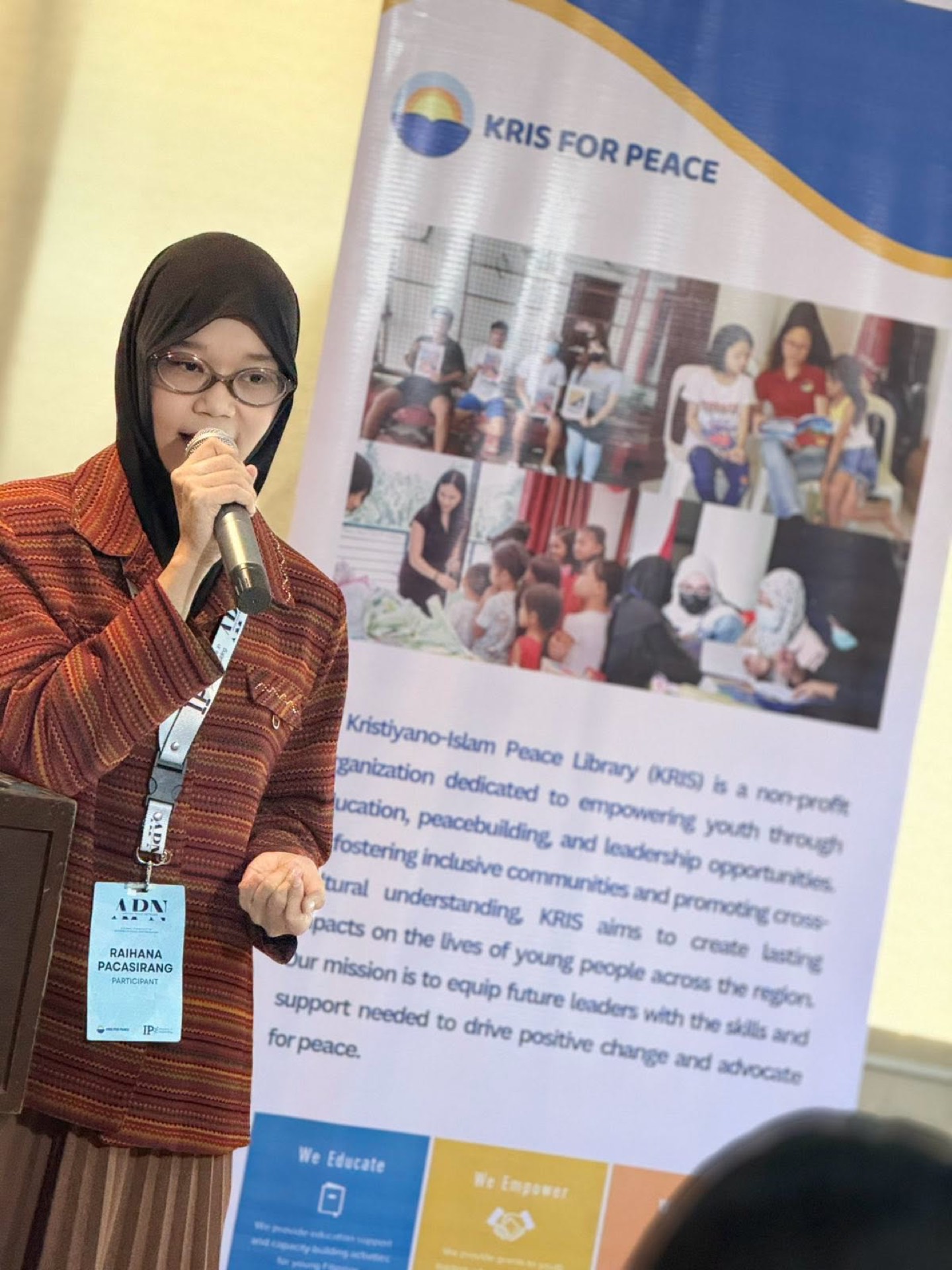
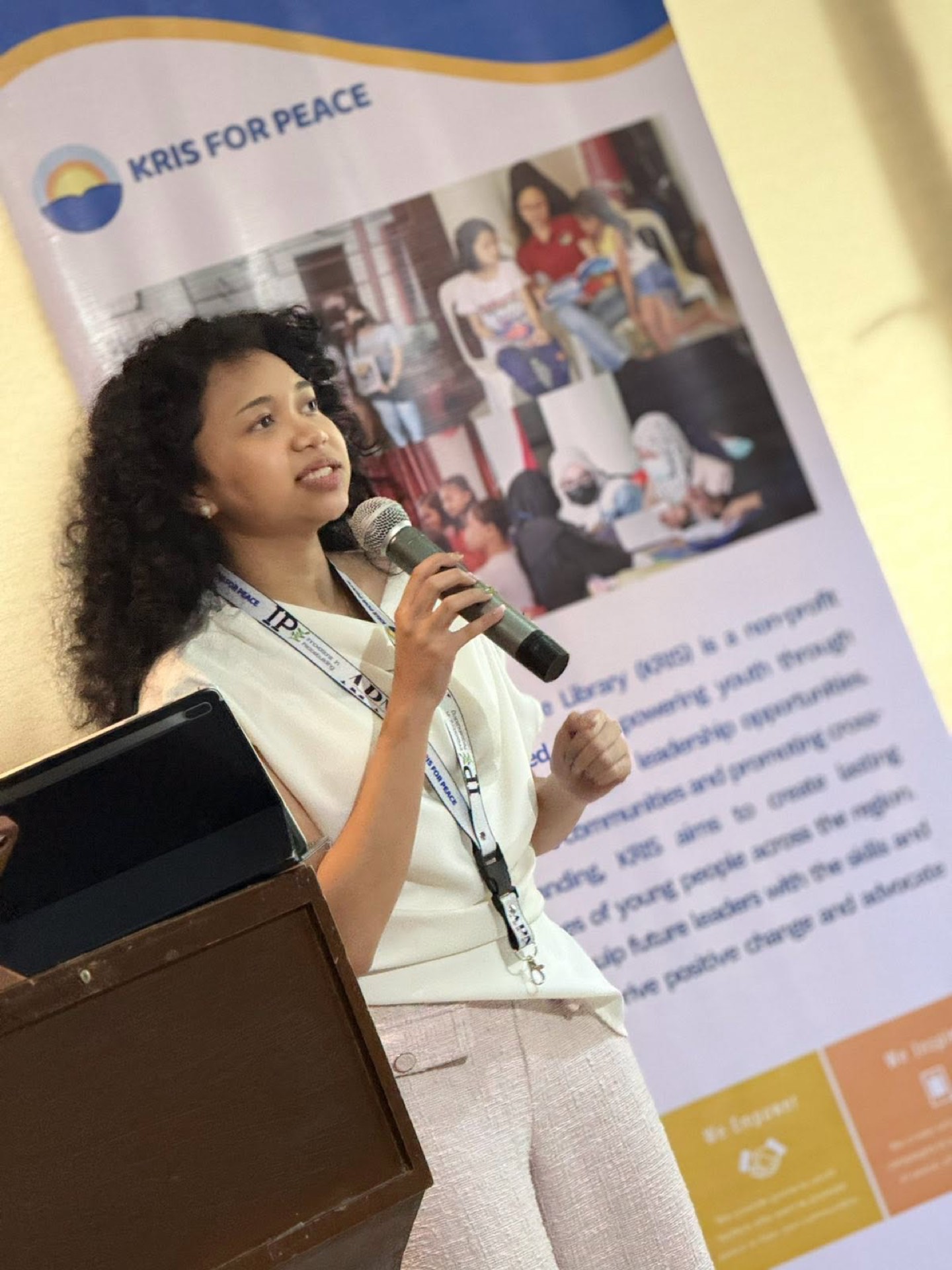
An APN participant presents at the Champions for Peace roll-up banner, Philippines.

Learning journey

Five components, two weeks.

01

Identity, purpose & leadership

Opens with group activities and participant showcases that ground the cohort in shared culture, education, and environment.

02

History, context & peace narratives

The Philippine peace process and the Bangsamoro experience, taught by practitioners from OPAPRU, Crisis Group, and Akbayan.

03

Innovation, futures & cross-sector peace

Climate action, digital technology, and business, taught by founders from Eskwelabs, Mayani, and AIM-DBI.

04

Experiential learning & global perspectives

Site visits to the Ayala Museum, the Asian Institute of Management, Quezon City Municipal Hall, and the Norwegian Embassy.

05

Capstone development & presentation

Each participant gets 30 minutes to present a capstone idea, and 10 minutes to answer questions from a panel.

Capstone ideas · 2026 cohort

Ideas delivered by our APN participants.

Marawi City

Katagumpiya Para Ko Kalilintad

Restorative programming across three Marawi institutions, tackling poverty, weak leadership, and youth recruitment risk.

Adamson University

CARE Certified

A student-led mental health response network so students and neighbors get support during emergencies, before they need a professional.

Davao & BARMM

Legislative Monuments of Peace

Turns standard youth council funds into instruments for peacebuilding along fragile Davao-BARMM border areas.

Valenzuela City

AIDLIP

Builds AI and digital literacy in schools and communities, so digital peace keeps pace with digital risk.

Marawi, Tacloban & QC

Roots of Resilience

Pushes for restorative justice in Philippine schools, replacing punitive discipline with community-building.

Iligan City

Project KUYOG

A storybook and coloring book that teaches daycare learners and parents to recognize and prevent online sexual abuse.

A seventh idea, "Education Beyond the Waves," proposes learning materials for 50 kindergarten pupils in Tawi-Tawi.

An APN participant speaks in front of the KRIS for Peace banner.

Who's in the room

Eleven leaders, one shared commitment.

The 2026 cohort brought together 6 women and 5 men, most in their early twenties, from Mindanao (including BARMM and Indigenous communities), the NCR, and Regions I, X, and XII. Nine in ten already considered peacebuilding their primary field, alongside backgrounds in education, governance, climate action, and tech.

Resource speakers included Beth Manrique of the U.S. Institute of Peace, OPAPRU's Ishmael Bahjin, Crisis Group's Georgi Engelbrecht, and founders from Eskwelabs, Mayani, and AIM-DBI.

"My peers showed me there isn't just one way to build peace. Each of us came from different communities and experiences, yet we shared the same commitment to creating positive change."— APN participant, 2026 cohort
"Exceeded expectations! Loved the top-tier KRIS and IP experts, the Norwegian Embassy visit, and inspiring alumni roadmaps. Grateful for this journey."— APN participant, 2026 cohort

Help us train the next cohort

Back the Applied Peace Network.